
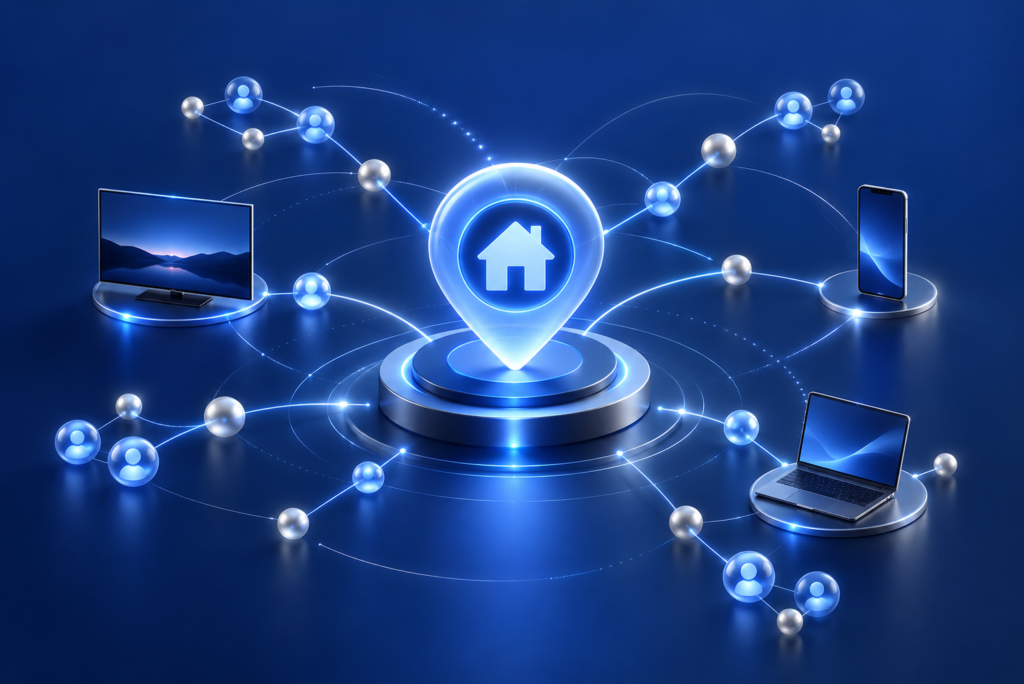
You’ve invested in first-party data. You’re building out your identity graph. But as campaigns expand across CTV, digital, and mobile, something keeps slipping — reach that looked strong in one channel doesn’t carry over to the next, and audiences you targeted last month aren’t connecting the way they should today.
The issue isn’t your data. It’s the structure holding it together.
Most identity solutions focus on one of two things: expanding the graph by matching data to new identifiers, or preserving those relationships as the underlying signals evolve over time. Doing only one isn’t enough — and the gap between them is exactly where identity breaks down.
Identity Graphs Lose Accuracy Over Time — Even Good Ones
Think about how often the signals your identity graph relies on actually change. Consumers move between home Wi-Fi and mobile networks, replace devices, clear identifiers, and experience IP address changes as ISPs reassign addresses. Over time, these changes alter the signals identity graphs use to maintain audience relationships. Without a stable foundation, those relationships can become increasingly fragmented.
This isn’t a problem you solve once. It’s an ongoing pressure that any identity infrastructure needs to be built to withstand. And most weren’t designed with that in mind.
Matching Is a Strong Start — But the Signals Around It Don’t Stand Still
Matching your first-party data to new identifiers — IP addresses, mobile advertising IDs, connected TV devices — is how you extend reach beyond your known audience. It’s essential, and when done well, it meaningfully expands what your identity graph can do.
The challenge isn’t matching itself. It’s what happens after. When an IP address rotates or a device resets, a connection that was accurate at the time of matching becomes stale — not because the match was wrong, but because the digital signals around it have shifted. Without a stable foundation to preserve those relationships over time, even a well-built graph loses fidelity between campaign flights.
Stability Without Scale Has Its Own Limits
Locking identity to something persistent — a physical location — solves the durability problem. Connections that are anchored to where people reside don’t disappear when a device turns over.
But if stability isn’t paired with the ability to grow, the graph stagnates. It holds onto what it has without building new connections to the devices, screens, and channels where your audiences are actually spending time. A durable but narrow graph still can’t deliver the reach modern campaigns need.
LocID Graph: Built to Do Both
LocID Graph from Digital Envoy combines stabilizing and matching into a single identity foundation — one that expands your graph’s reach while keeping it structurally sound over time, enabling the continued activation of audiences even as signals move or change.
Anchoring Identity to Location
Rather than linking identifiers only to other short-lived signals, LocID Graph introduces LocID as a persistent reference tied to a stable physical location.
As devices change and IP addresses rotate, LocID provides continuity across those transitions. Historical IP observations can be mapped back to the same location anchor, allowing organizations to reconnect previously matched audiences and extend the value of existing identity graphs rather than rebuilding them from scratch.
This means that audiences created months ago can continue to evolve alongside changing network signals. Existing graph investments remain useful longer because the underlying relationships can be refreshed and maintained over time.
The result is an identity graph that not only captures connections but continuously reinforces them, preserving audience integrity across campaigns, channels, and measurement environments.
Expanding Your Reach
LocID Graph connects your first-party data to new identifiers through deterministic matching. Mapping to IP addresses observed at those locations, and from those IPs to the mobile devices that have connected there. You can also start from IP addresses or mobile IDs and match in either direction. Each path adds new, verified connections across the devices and channels where your customers are reachable.
What That Means for Your Campaigns
When match and stability work together, the practical impact is measurable:
- Extend the life of existing audience and identity graph investments
- Reconnect audiences that may have become fragmented due to IP changes
- Reach households more consistently across CTV, digital, and mobile
- Maintain continuity as devices and network signals evolve
- Improve confidence in measurement, attribution, and frequency management
- Reduce audience erosion between campaign flights
Matching creates reach. Stabilization creates durability. Together, they create the kind of identity foundation that supports real cross-channel activation — not just at launch, but over the life of every campaign.
Ready to strengthen your identity graph? Talk to our team to learn how LocID Graph can expand your reach and keep it.
Frequently Asked Questions
What is LocID Graph?
LocID Graph combines identity augmentation with a persistent location-based reference layer to help organizations create larger, more durable audiences. It expands identity graphs through deterministic matching while helping maintain audience continuity as devices and IP addresses change over time.
How is LocID Graph different from a traditional identity graph?
Traditional identity graphs focus on connecting identifiers. LocID Graph adds a persistent location-based anchor that helps maintain those connections over time, reducing the impact of signal volatility and audience fragmentation.
Does LocID Graph replace an existing identity graph?
No. LocID Graph is designed to complement existing identity infrastructure. It can enhance identity graphs by introducing additional identifiers and providing a stable reference layer that helps preserve audience relationships over time.
What types of identifiers can LocID Graph connect?
LocID Graph can connect physical locations, IP addresses, mobile advertising IDs (MAIDs), connected TV devices, and other identifiers through deterministic matching pathways.
Can LocID Graph help extend the value of existing audience data?
Yes. By maintaining continuity across changing signals, LocID Graph can help organizations preserve and refresh audience relationships rather than rebuilding them from scratch when identifiers change.
Can Historical IP Data Be Used with LocID Graph?
Yes. Historical IP observations can be used to help maintain and refresh identity relationships over time. By associating historical IP data with a persistent location-based reference, organizations can better understand how network signals have evolved and reconnect audiences that may have become disconnected as IP addresses changed. This helps preserve audience intelligence and reduces the need to rebuild identity relationships from scratch.